
More choice, greater negotiating flexibility and a market finding its balance. Why the changing landscape of Los Cabos real estate could present compelling opportunities for luxury buyers.
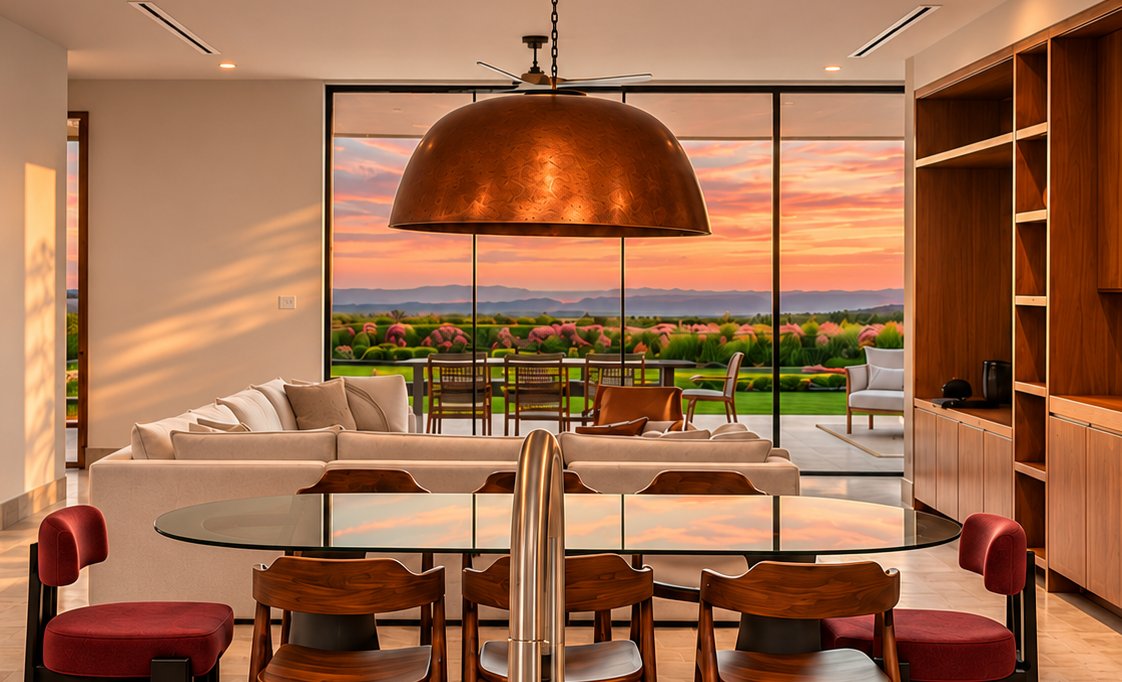
The Money Is Still There. The Urgency Isn’t.
Not so long ago, buying a luxury vacation home in Los Cabos often meant moving quickly.
Inventory was limited, competition was intense and desirable properties attracted attention before buyers had much time to evaluate their options.
The post-pandemic boom created an environment where the fear of missing out sometimes influenced purchasing decisions. But markets evolve.
Today, many of the American and Canadian buyers considering property in Los Cabos are still financially well-positioned.
They already own their primary residences, have accumulated substantial wealth and are considering a second or third home for lifestyle, retirement or investment purposes. At South House, the overwhelming majority of our buyers purchase with cash.
These aren’t necessarily people waiting for mortgage rates to fall or trying to qualify for financing. They have the means to buy.
They’re simply becoming more selective about when, where and how they deploy their capital.
And in the current market, that selectivity may work in their favor.
A Different Economic Climate. A Different Buyer.
Los Cabos may offer an escape from the weather back home, but it doesn’t exist in isolation from the broader North American economy.
Housing markets across parts of the United States and Canada have slowed, while economic uncertainty has encouraged more measured investment decisions.
For buyers who already hold significant real estate and investment portfolios, purchasing another multimillion-dollar property is as much a capital-allocation decision as a lifestyle choice.
The question isn’t simply whether they can afford the property. It’s whether the property represents good value, whether the timing makes sense and whether it fits their longer-term plans.
For some, that means taking longer to evaluate opportunities. For others, it means recognizing that changing market conditions may create opportunities that were harder to find during the boom years.
The desire to own in Los Cabos hasn’t disappeared. The urgency to purchase has changed.
Nine Months, Not Ninety Days: The Bigger Market Picture
 Quarterly real estate reports can make for dramatic headlines.
One quarter, sales are down. The next, dollar volume has shifted. And suddenly, everyone has an opinion about where the market is heading.
But a luxury real estate market shouldn’t be judged by a single quarter.
To understand what’s happening in Los Cabos, we prefer to look at a broader period.
Across the first nine months of 2026, our compiled market figures indicate:
807 residential transactions closed between January and September.
Approximately US$934 million in total residential sales volume was recorded during the same period.
At the end of Q3, active residential inventory stood at approximately 1,945 listings.
These figures reflect a market that remains active, even as the pace of transactions has moderated from the extraordinary levels experienced during the post-pandemic boom.
They also illustrate the scale of the Los Cabos real estate market, with nearly a billion dollars in reported residential transactions during the first nine months of the year.
Of course, sales volume alone doesn’t tell the whole story. Inventory levels, property types, pricing expectations and the time required to complete transactions all contribute to understanding the market’s direction.
What we’re seeing is a market moving away from urgency and toward a more considered balance between buyers and sellers.
And for purchasers who value choice and negotiating flexibility, that’s an interesting development.
A Market Finding Its Balance
Los Cabos experienced substantial residential development during and after the pandemic.
New communities, resort residences, luxury condominiums and private villas expanded the range of properties available to international buyers.
That growth has helped transform the destination.
But periods of rapid development are often followed by periods in which supply needs time to be absorbed.
Today, buyers have more opportunities to compare properties, while sellers and developers are adapting to a more selective market.
We’re also seeing some developers reconsider the timing of future projects, allowing existing inventory more opportunity to find buyers before additional properties enter the market.
From a longer-term perspective, that can be a healthy adjustment.
A more balanced market encourages realistic pricing, greater competition among sellers and greater attention to what buyers actually want.
It also helps distinguish properties with lasting appeal from those that relied primarily on the momentum of a rising market.
The market isn’t standing still. It’s finding a new balance.
The Turn Is Just Around the Corner. But How Long Is the Corner?
 It’s the question everyone wants answered.
Have we reached the bottom? Are prices going to fall further?
And when will the market begin moving upward again? The reality is that nobody knows precisely when a real estate cycle will turn.
Markets rarely announce the moment they’ve reached their lowest point. More often, the signs emerge gradually.
Inventory begins to stabilize. Sales activity improves. Well-priced properties attract stronger interest. And the gap between buyer and seller expectations starts to narrow.
By the time those signals become obvious, some of the most attractive opportunities may already have changed hands. There’s an old saying that the market turn is just around the corner.
The problem is, nobody knows how long the corner is.
For buyers with the financial means and a long-term perspective, however, trying to identify the exact bottom may be less important than recognizing genuine value.
A well-located property, purchased at a sensible price and held for several years, doesn’t need to be acquired on the single cheapest day of the market cycle to represent a successful purchase.
And that’s where the current environment becomes interesting.
More Choice. Better Conversations. Greater Opportunity.
 One of the most significant changes in today’s Los Cabos market is the amount of choice available to buyers.
During the busiest years, purchasers sometimes had to compromise on location, layout or pricing simply to secure a desirable property.
Today, they may have the opportunity to compare several properties within the same community, evaluate new developments against established resales and negotiate from a more informed position.
We’re seeing opportunities to discuss pricing, furnishings, upgrades, developer incentives and other considerations that might have been far less negotiable a few years ago.
But there’s an important distinction.
A property isn’t a bargain simply because its asking price has been reduced.
What matters is how that price compares with recent closed sales, competing inventory, replacement costs and the property’s long-term appeal.
An oceanfront condominium in San José del Cabo’s Hotel Zone, a golf-course villa in Puerto Los Cabos and a luxury residence in Palmilla may all perform very differently depending on their location, price point and available inventory.
Location, quality, views, community amenities and scarcity still matter. And desirable properties that are correctly priced can attract serious buyers regardless of the broader market.
The opportunity isn’t necessarily to purchase the cheapest property. It’s to purchase the right property under favourable conditions.
Why Los Cabos Still Makes Sense
It’s easy to become absorbed in market statistics and inventory figures.
But we shouldn’t lose sight of why people buy homes in Los Cabos in the first place. For many American and Canadian purchasers, this isn’t simply another financial investment.
It’s an investment in how they want to live. The ability to spend winters in the sunshine, play golf year-round, enjoy exceptional restaurants, entertain family and friends, and spend more time outdoors. For others, a property here represents the beginning of a longer-term retirement plan.
Those lifestyle motivations remain compelling regardless of short-term market conditions.
And Los Cabos offers something that many other vacation destinations struggle to replicate: a combination of established luxury communities, international accessibility, resort amenities and a lifestyle that appeals to buyers from across North America.
That doesn’t mean every property is a good investment. Nor does it mean buyers should ignore market conditions.
But it does explain why the long-term attraction of owning here extends beyond quarterly sales figures. For someone planning to enjoy a property over the next ten or fifteen years, the experience of ownership may be every bit as important as its eventual resale value.
Owning More Intelligently
Another interesting development is how buyers are thinking about the structure of their ownership.
Someone planning to spend five or six months annually in Los Cabos may find full ownership the obvious choice.
A buyer seeking rental income will assess occupancy potential, operating costs and management arrangements.
Someone visiting for only a few weeks each year may prefer a smaller capital commitment.
Deeded fractional ownership, such as the program offered at Viceroy Los Cabos, provides one alternative for buyers seeking recurring personal use without purchasing an entire residence. It’s a lifestyle ownership model rather than a rental-income investment, and the associated fees, usage rights and resale considerations remain important.
Different buyers. Different objectives.
And increasingly, a more thoughtful approach to matching the property with the purpose. The common theme is that affluent buyers are becoming more selective, not necessarily less interested.
A Market Worth Paying Attention To
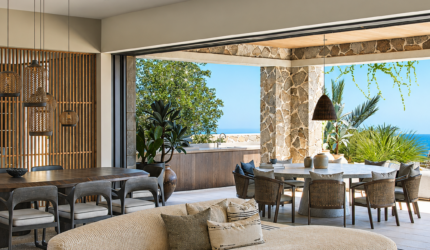 The next chapter of Los Cabos real estate is unlikely to look exactly like the last.
And that’s not necessarily a bad thing.
Periods of rapid appreciation and intense competition can be exciting, but they don’t always create the best environment for careful investment decisions.
A market with more inventory, realistic negotiations and greater choice can be particularly attractive to buyers who have the capital, patience and confidence to act when the right opportunity appears.
Will prices fall further in certain segments? Possibly. Could transaction activity begin to recover before the broader market recognizes the change? Certainly possible. But predicting the precise bottom isn’t the objective. Understanding value is.
At South House, we believe the current environment offers an opportunity for buyers to approach Los Cabos with a fresh perspective. To compare more properties, ask better questions and negotiate from a position of knowledge rather than urgency.
Because while the market may be changing, the reasons people fall in love with Los Cabos haven’t.
The opportunity hasn’t disappeared. It’s simply changed shape.
And for buyers considering their second or third home, that could be a very welcome development.
—
South House Real Estate is a boutique luxury brokerage based in San José del Cabo, advising American, Canadian and international buyers on luxury property ownership throughout Los Cabos.
Editorial note: Nine-month totals are provisional aggregates of previously compiled Q1–Q3 2026 market figures. Confirm consistent MLS definitions and reporting periods before publication. Inventory is a September-end snapshot, not a nine-month total. Development activity reflects brokerage observations. Market conditions and future property values are not guaranteed.